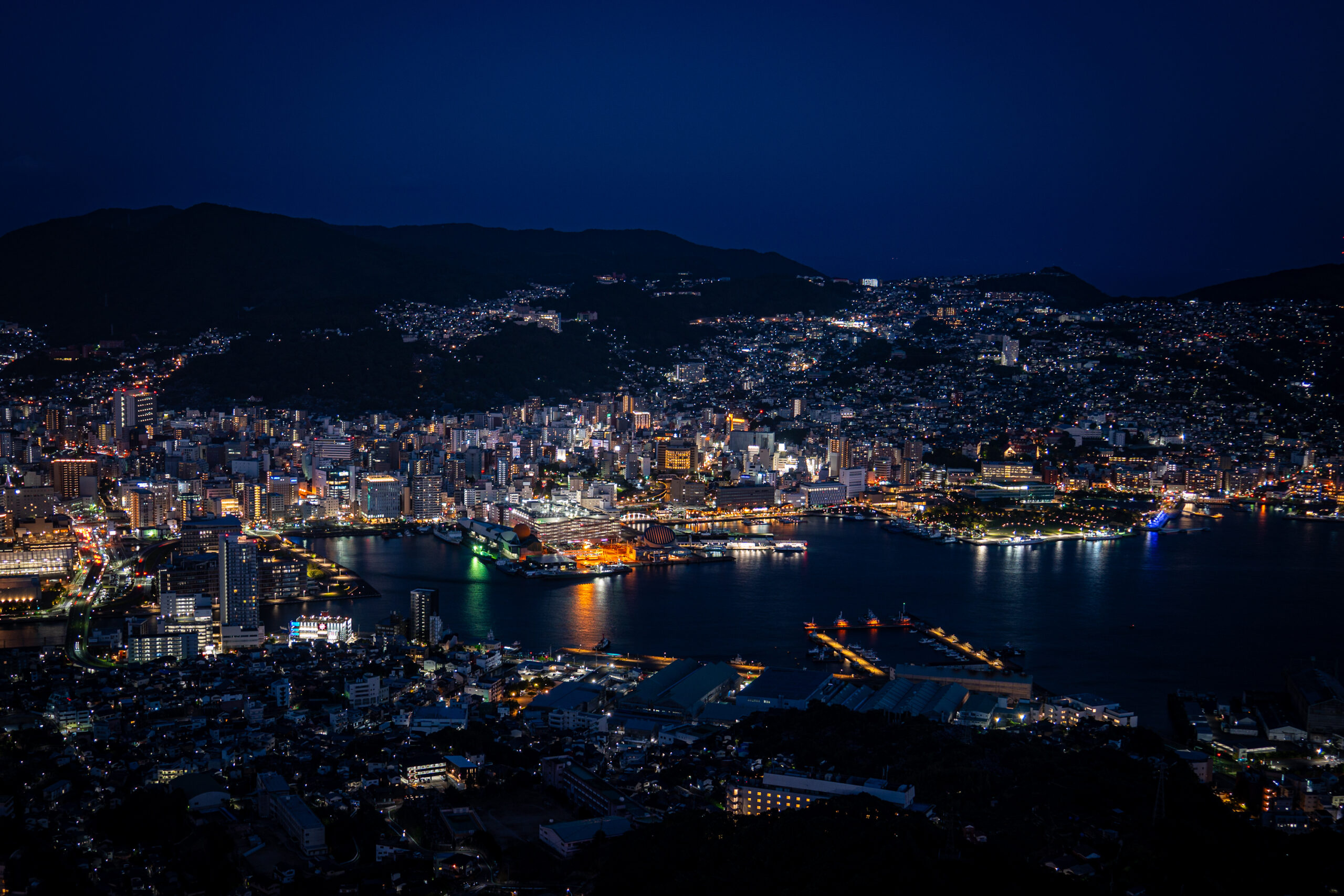
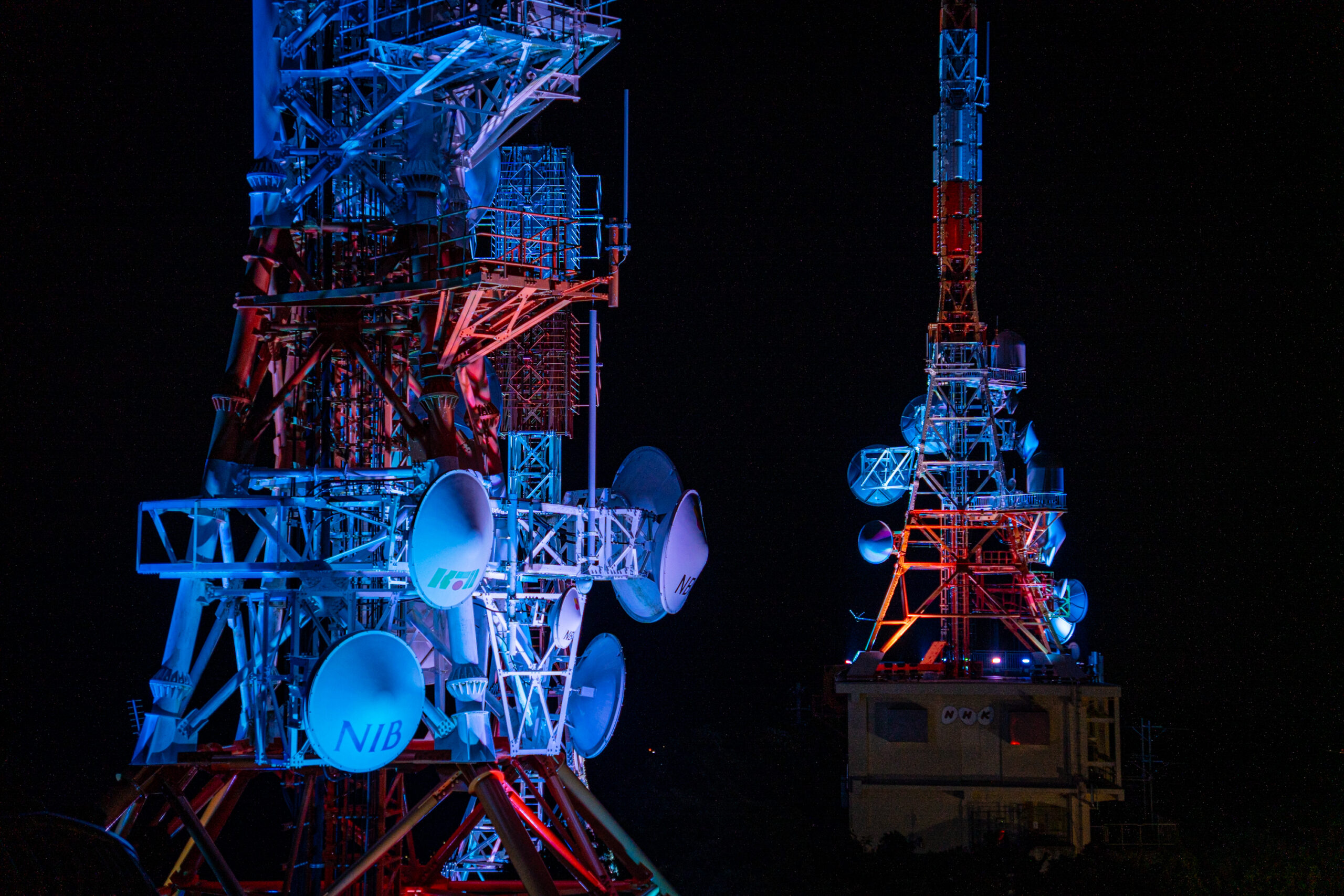
…at least according to the “World Night View Summit”, which deemed the view from Mount Inasa, one of the mountains surrounding the city, as one of the 3 best night views in the world. Of course, we had to check this out to improve our night photography skills and test out the new mini tripod, a recent purchase from our first BIC Camera visit. When it comes to ropeway management, Nagasaki will not make any record lists though, as the capacity is about 0.1 person per second (we did the math) and there were hundreds of people waiting for a ride down the mountain. We seemed to get “lucky” by only waiting for 1h… A field where the Japanese can definitely learn a thing or two from the Swiss. Was it worth the world-class view in the end? Debatable…
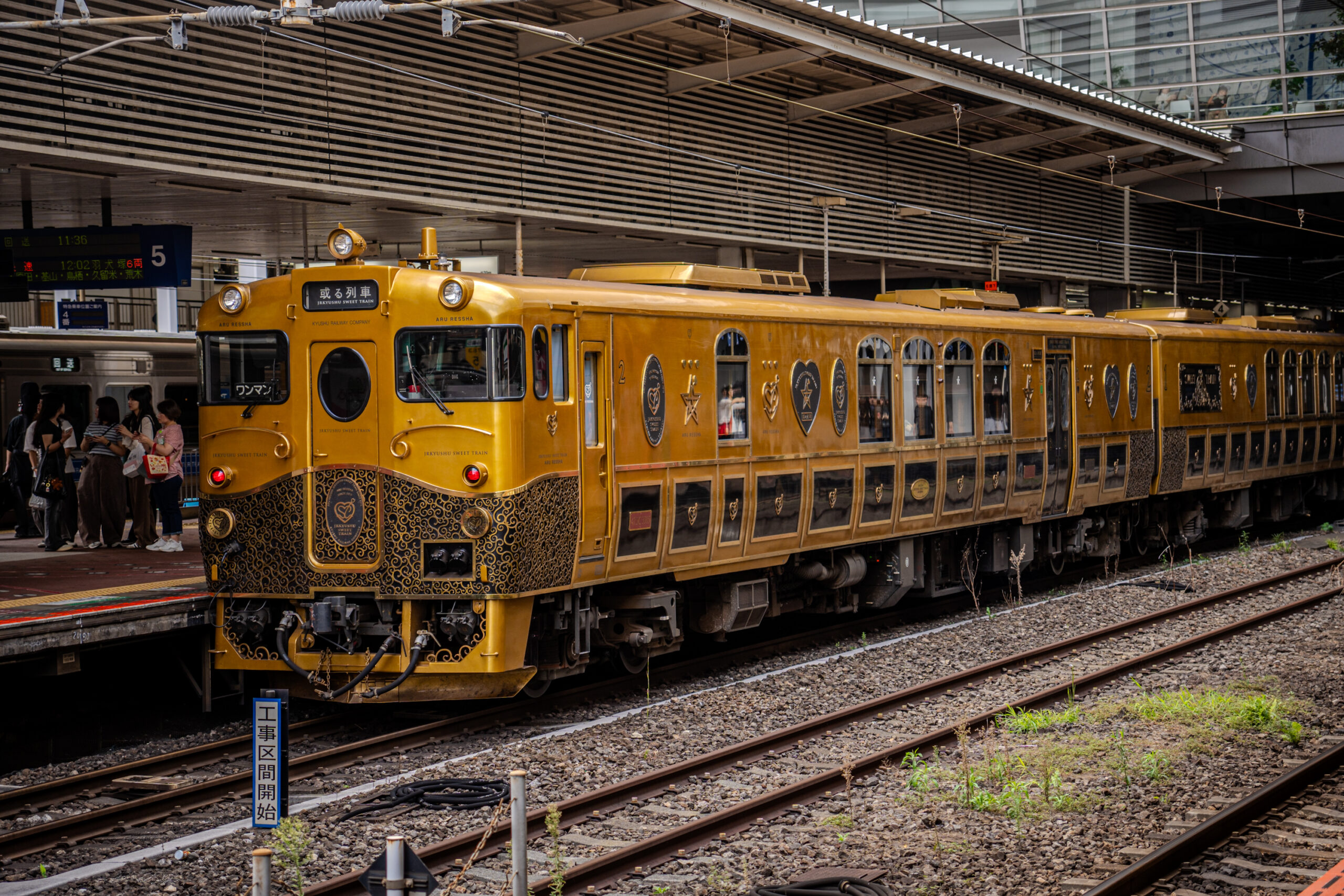
Another new Japanese mode of transit we got to experience here is the Japanese streetcars. Quite a bit smaller than the trams we’re used to back home with some of them seemingly built in the 50s. We also had to relearn the priority rules, causing some confusion on the streets when we tried to give the tram the right of way.
As for the city itself, we learned about Nagasaki’s surprisingly rich history besides the well-known fact that it was the second and, so far, last place on earth where an atomic bomb was ever used in war (let’s hope we can say that for a long time). Over many centuries, Nagasaki was, so to speak, the door to the world for Japan. It was the hub for trade with many nations like the Portuguese, the Dutch and many more, with foreign merchants landing here and using it as a hub for their trade and colonisation efforts.
Logically, it was also where external religious influence originated in Japan, with the colonising nations bringing Christianity to a well-adopting Japanese population (for those of you who have seen the series Shōgun, you’ll be well aware of that part of Japanese history. For those who have not, go watch it!). There are many buildings and churches that remind of that foreign influence. Another example of this is Dejima, an island no bigger than 200 meters, where after a lot of back and forth about whether Christianity should be allowed in Japan, the Dutch were „banned“ onto but allowed to continue their trade under strict restrictions. Steve mostly saw Luxembourgish flags everywhere though, as the blue they used to represent the Dutch flag was either very light or already faded.
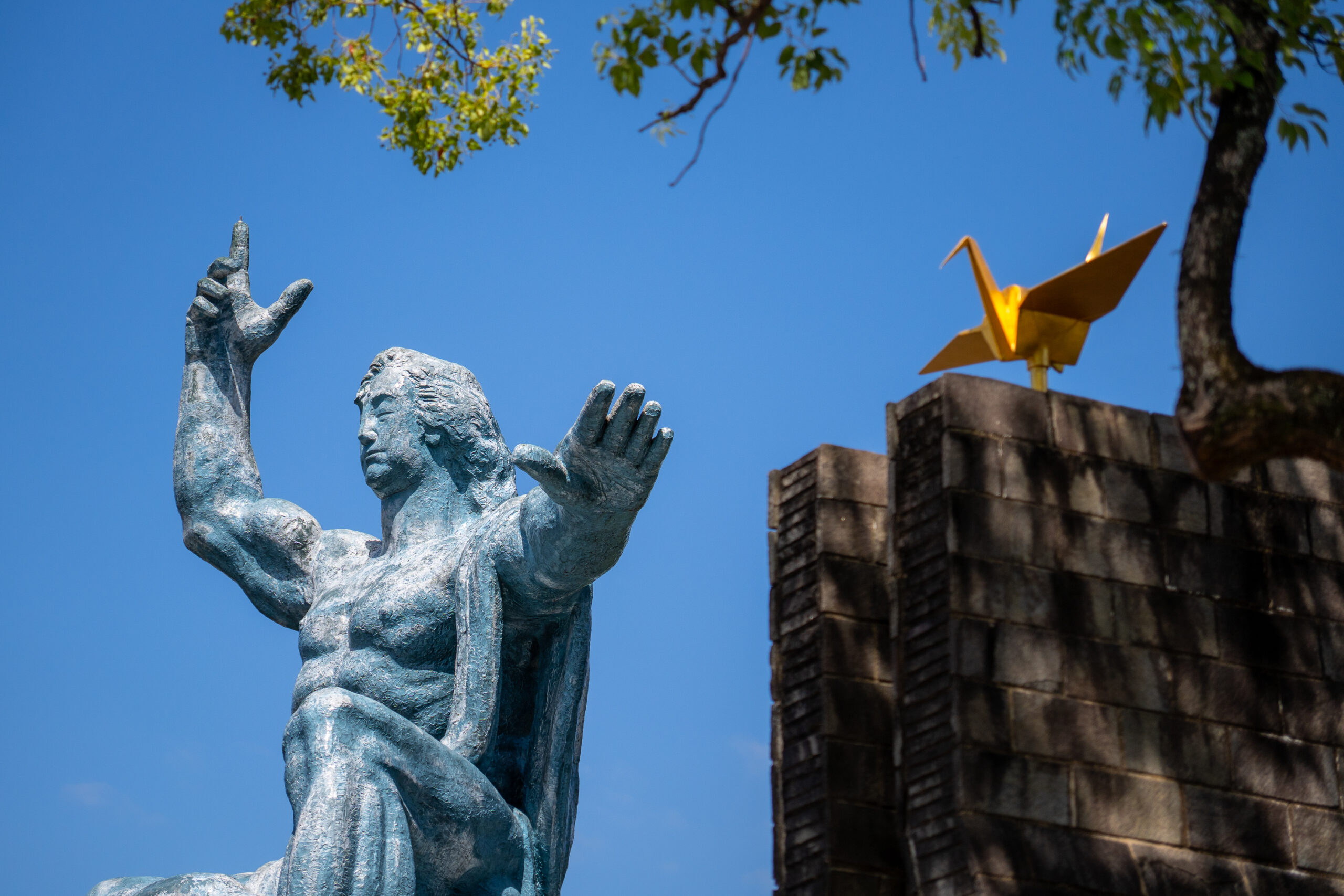
The Peace Park, with its many peace statues, allowed us to reflect on some not-so-joyful things from the past. Together with the museum, it is very well done and definitely worth the visit if you ever make it here. Personally, we find the one in Hiroshima a bit more striking and impressive, not to diminish, of course, the suffering the people of Nagasaki endured. We’ll leave you with only one fact on this that invites to reflect: at the time of the A-bombing, Nagasaki’s population was around 240,000. The bomb killed around 70,000 people pretty much immediately, but they update the list of people who died due to the bomb’s effects to this day, which currently stands at 204,000.
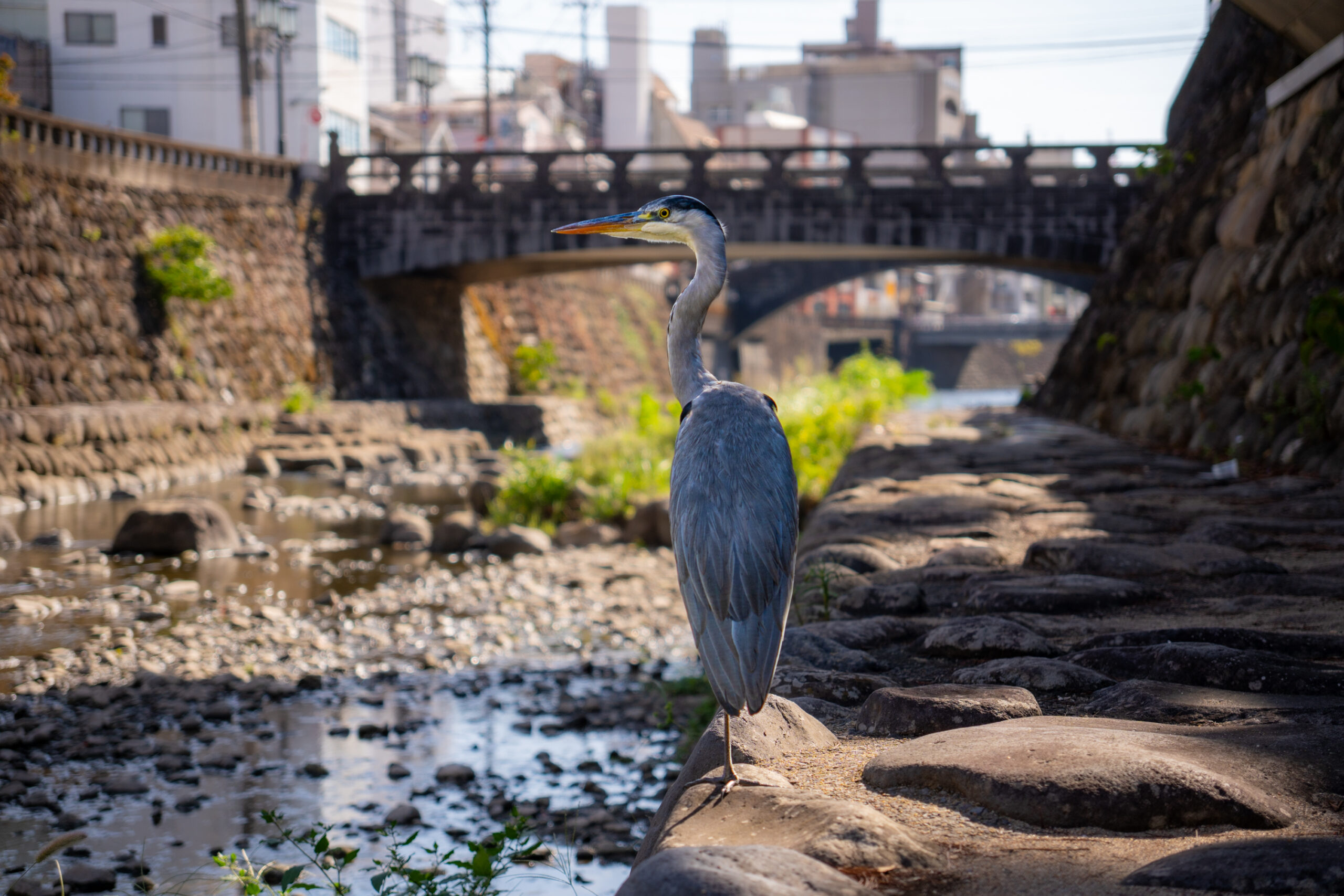
PS: Bets are on! How many herons will make it to the blog?









- Country
- Japan
- Region
- Nagasaki
- Date
- 21 September 2026
- Camera
- Sony a6700
- GPS
- 32.773632,129.863242

Merci fir die kleng Geschichtsstonn iwer die eenzel Plaatzen wou dir lanscht kommt. Emmer flott ze liesen 🥰
Weider esou 👍